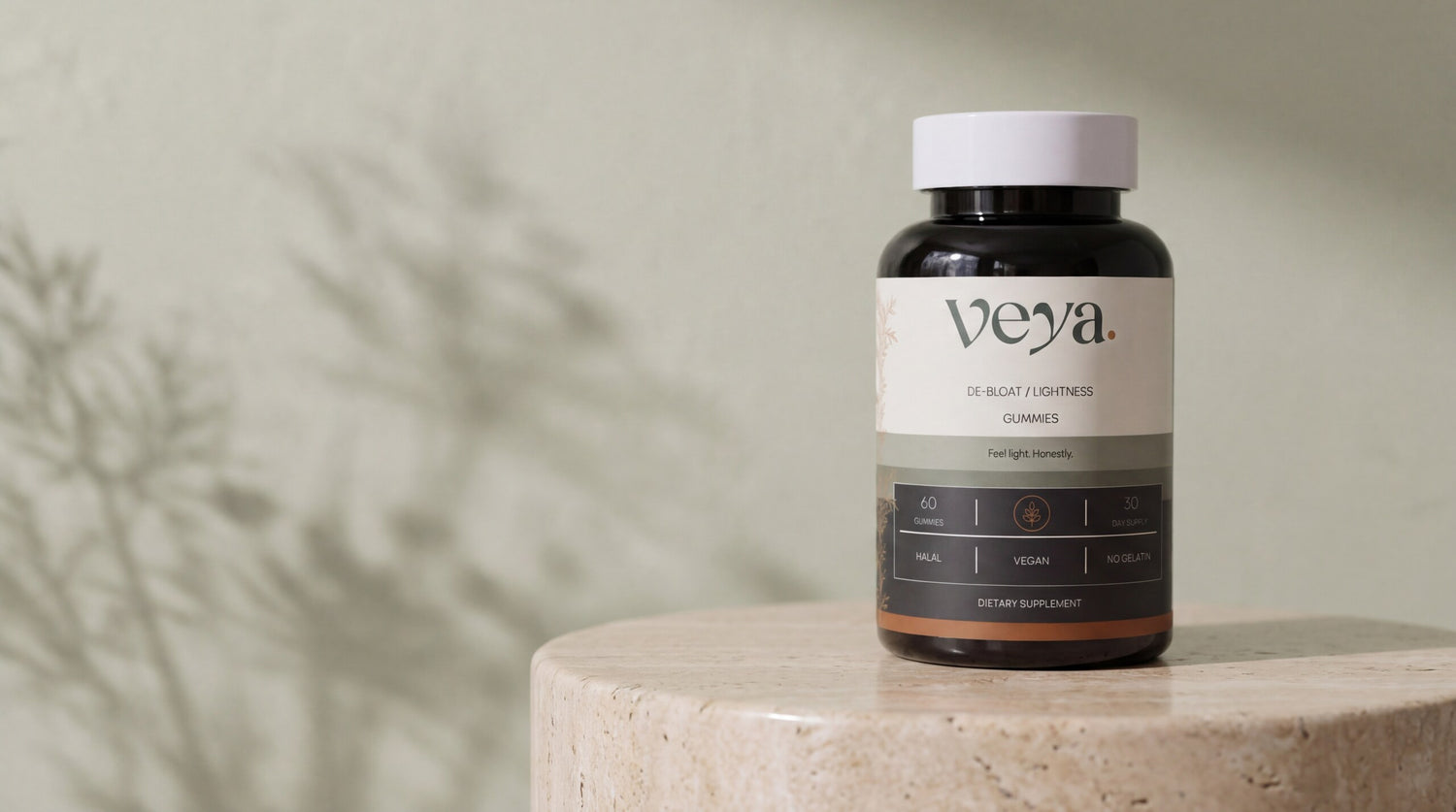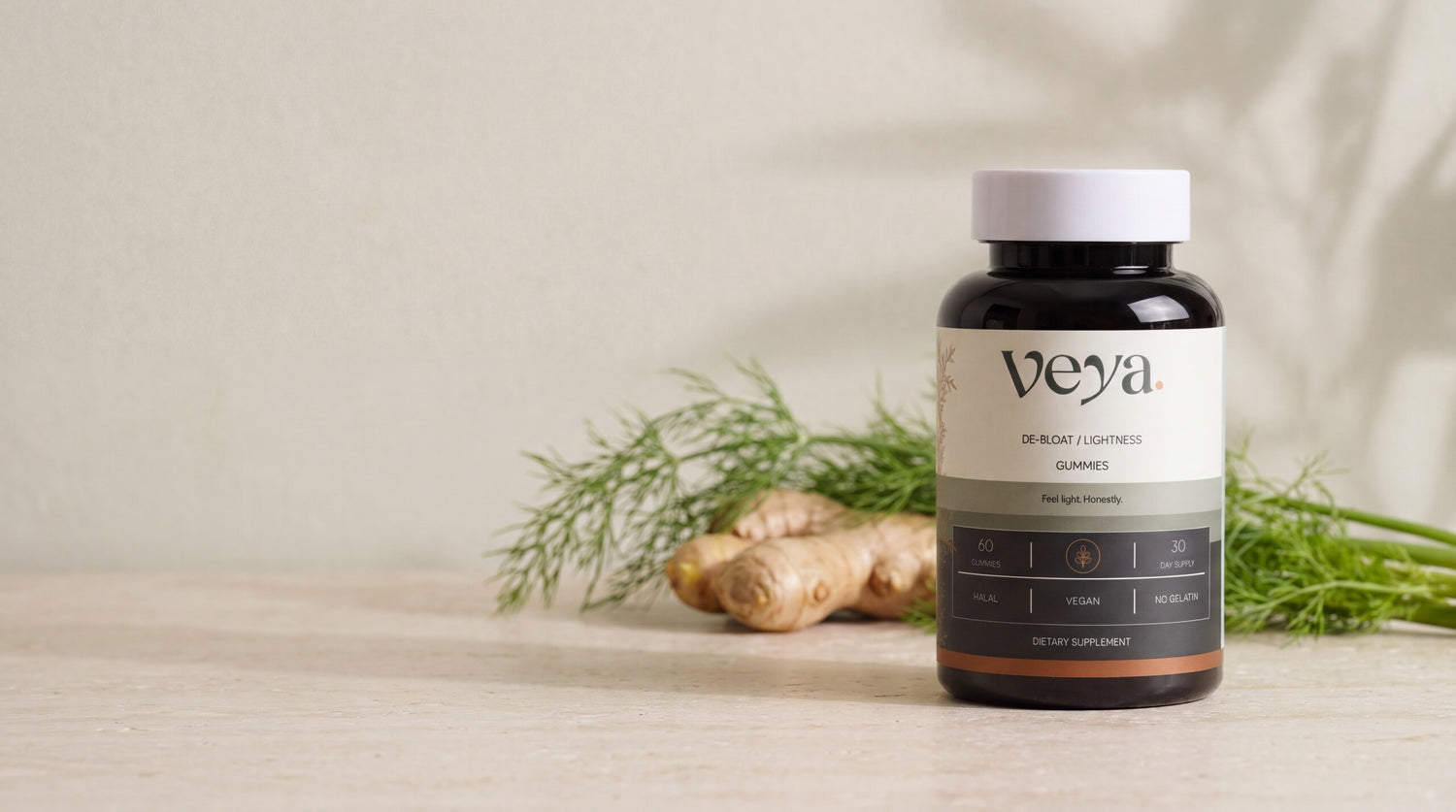

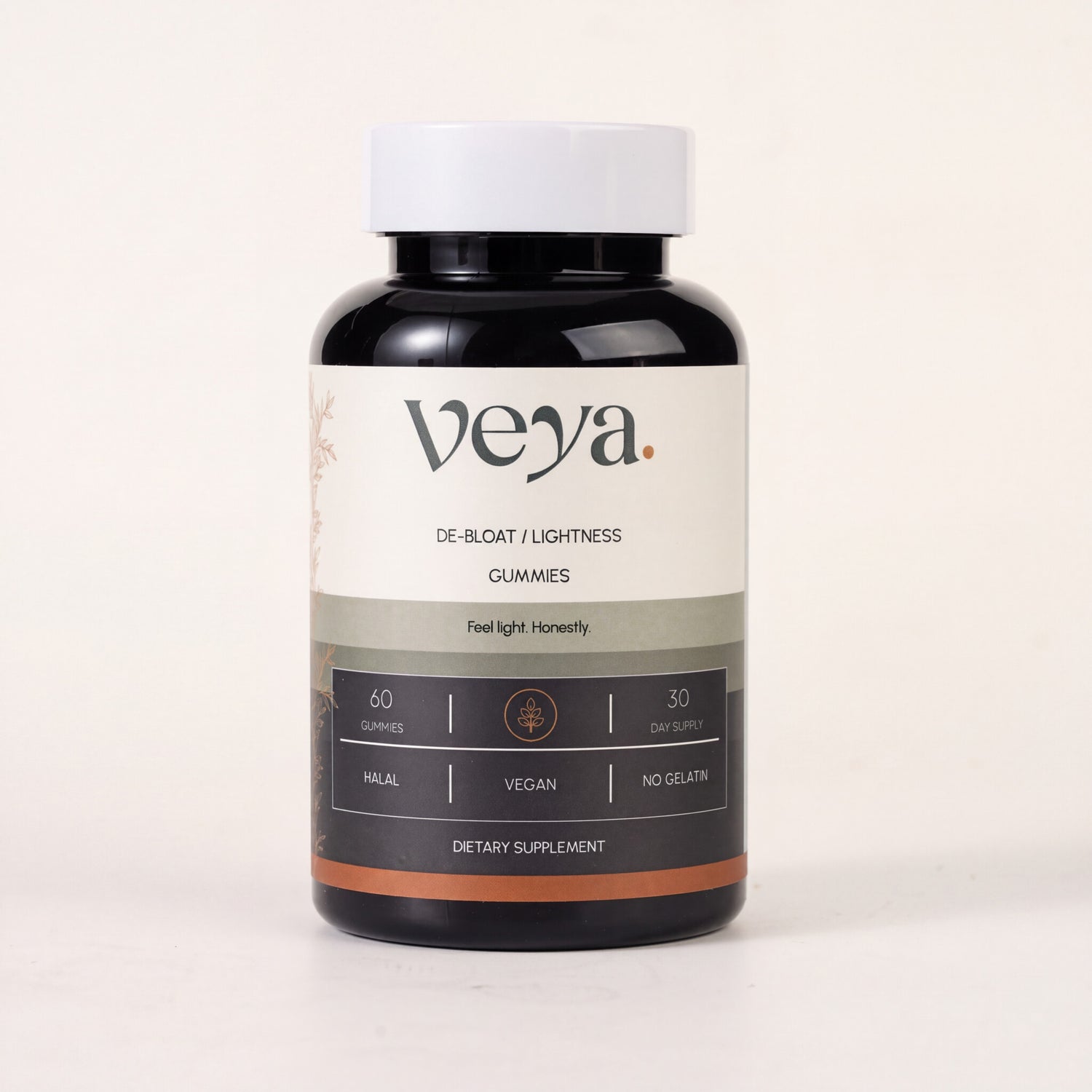
A supplement label is the most useful part of the bottle, if you know where to look. The front is for the brand. The back is for you. Here is how to read it, section by section, with our own bottle as the example where it helps.
Start with the serving size
Every figure on a label is tied to one serving, so find that first. It tells you how many units make up a serving, how often to take it, and how many servings the container holds. If amounts are given per serving and a serving is three capsules, one capsule holds a third of each figure.
On the Veya bottle, a serving is two gummies. The bottle holds 60 gummies, which is 30 mornings, and the label reads "60 gummies / 30 day supply". Simple arithmetic, but worth doing on any product before you compare prices.
Named actives versus a "proprietary blend"
The actives are the ingredients a product is built around. A clear label names each one and gives its amount per serving. Look at the form as well: "root extract" or "seed extract" tells you which part of the plant was used, and "potassium citrate" tells you which compound of the mineral.
A "proprietary blend" is different. It groups several ingredients under one total and does not say how much of each is inside. Ingredients in a blend are usually listed from most to least, and that order is about all a blend will tell you.
Veya has five actives, each named on its own rather than inside a blend: ginger root extract, dandelion leaf extract, fennel seed extract, vitamin B6 and potassium citrate. The amounts are printed on the bottle.
The allergen declaration
Allergens are usually set out in a separate statement, often in bold, sometimes with a line about the facility where the product was made. Read it every time, even on a product you have bought before, because formulas and suppliers can change.
For Veya, please read the label on the bottle before your first serving. If you have an allergy and anything is unclear, write to us or ask a pharmacist first.
"Other ingredients"
This is everything that is not an active: the base, sweeteners, flavourings, colours, coatings and processing aids. It is often where you learn whether a product suits the way you eat, for example whether the base is gelatin, and which sweeteners are used.
On the Veya bottle, the other ingredients are tapioca syrup, water, cane sugar, pectin, citric acid, lemon ginger flavour and palm wax. The base is vegan pectin, with no gelatin. Tapioca syrup and cane sugar are there because this is a gummy, and that is worth knowing before you start.
Directions and warnings
Directions tell you how much to take, when, and how. Warnings tell you who should not take it, and who should ask a doctor first. Read both before the first serving, not after.
Veya's directions are two gummies each morning, with water. Do not exceed the stated daily dose. Our safety guidance:
- Not for anyone under 18.
- If you are pregnant, breastfeeding, taking medication or under medical care, ask your doctor first.
- Ginger and dandelion leaf can interact with some medicines, including those for blood thinning, blood pressure, fluid retention, hormone therapy, and liver or kidney care.
- Keep out of reach of children.
What a label will not tell you
A label tells you what is in a product and how to take it. It cannot tell you how you personally will find it, and it is worth being wary of packaging that tries. Veya is a food supplement, not a medicine, and results vary from person to person.
If anything on a label is unclear, ask a pharmacist before you start. For questions about our bottle, see the FAQ or write to us at info@veyalight.com. We reply within one working day.